Stainless steel cold room sliding doors
Professional industrial door systems for chiller (+10°C) and freezer (-20°C) applications. Thick polyurethane insulation, heated frame construction and hermetic closing logic for uncompromising cold-chain safety and energy savings.
The door is the most critical energy point of a cold room
A poorly sealing cold room door causes continuous energy loss. Cold air escapes, compressors are overloaded, and moisture from incoming warm air can create dangerous ice formation on thresholds and seals.
In the design of our sliding doors, the primary objective is maintaining thermodynamic balance. The high-density polyurethane foam core, available between 60 and 140 mm, provides excellent U-value performance and helps prevent surface condensation.
Unlike conventional doors, our track system works with a drop-down mechanism. At the end of the closing cycle, the door leaf lowers and moves inward, using its own weight to press the EPDM rubber seals tightly against the frame and floor.
The stainless steel cladding, made from WNr. 1.4301 or WNr. 1.4404, not only meets HACCP hygiene requirements but also resists pallet traffic damage and high-pressure washdowns in meat or dairy facilities.
Thermal bridge-free design and precise fitting are especially important in spaces where temperature fluctuations directly affect product quality, energy consumption and operational safety. Our sliding doors therefore function not only as closures but as part of the technical protection of the entire refrigerated space: they help maintain stable temperature, reduce refrigeration load and lower operating costs over the long term.

Technology for an uncompromised cold chain
Drop-down track system
At the end position, the roller suspension drops into a recess, so the door leaf moves downward and inward, pressing the EPDM seal against the frame and providing airtight closing.
Thermal bridge-free door leaf design
The special profile design interrupts heat transfer between the metal surfaces of the cooled and warm zones. This helps prevent condensation and corrosion on the warm outer side of the door leaf.
Integrated frame and threshold heating
Our frames with integrated 220V electric heating cable ensure ice-free, easy opening and prevent EPDM seals from freezing to the frame at negative temperatures.
Components designed for heavy-duty use
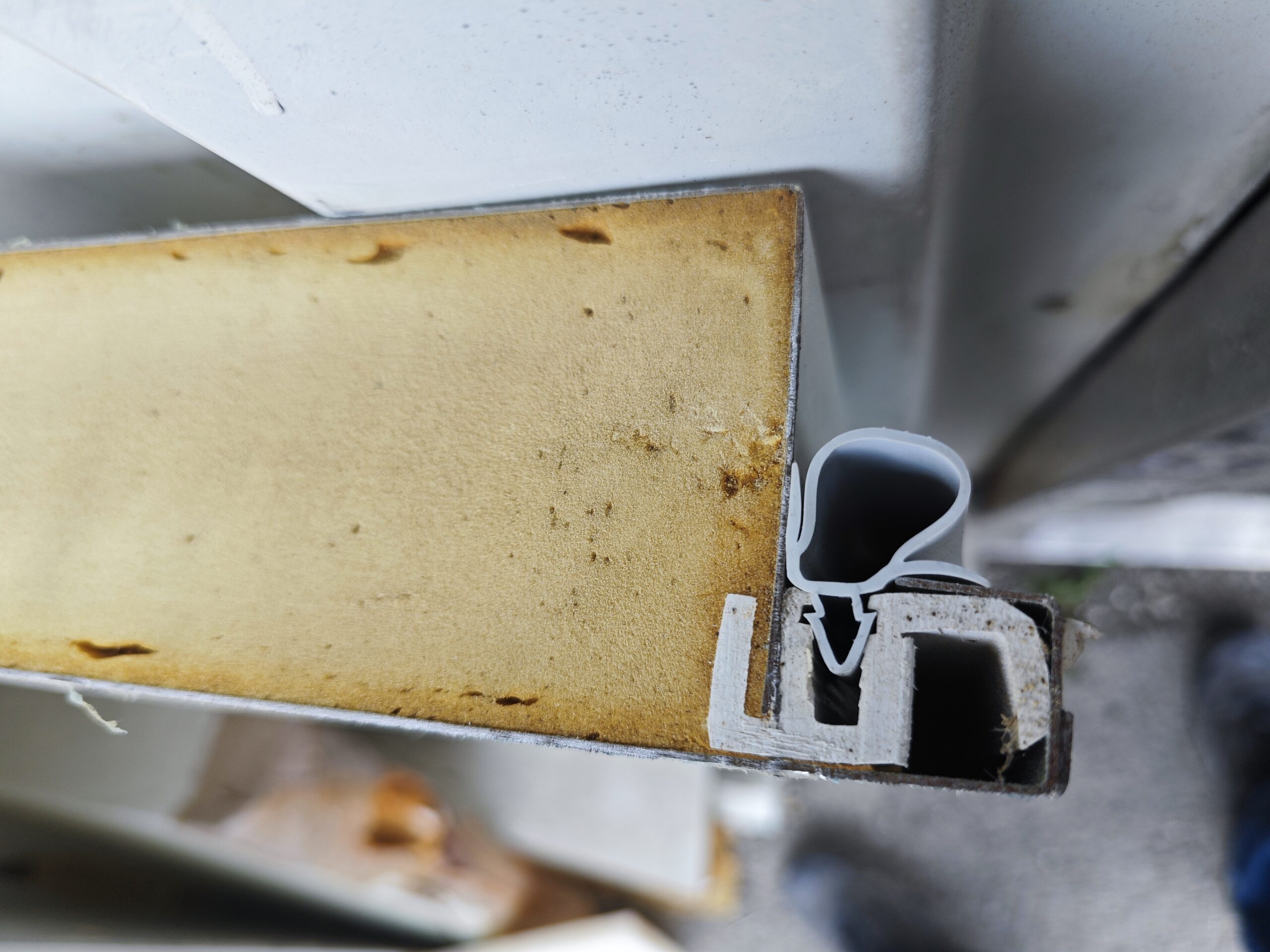
PUR composite construction
The door leaf consists of freon-free, high-density injected polyurethane foam protected by brushed stainless steel cladding against mechanical impact and chemical washdowns.
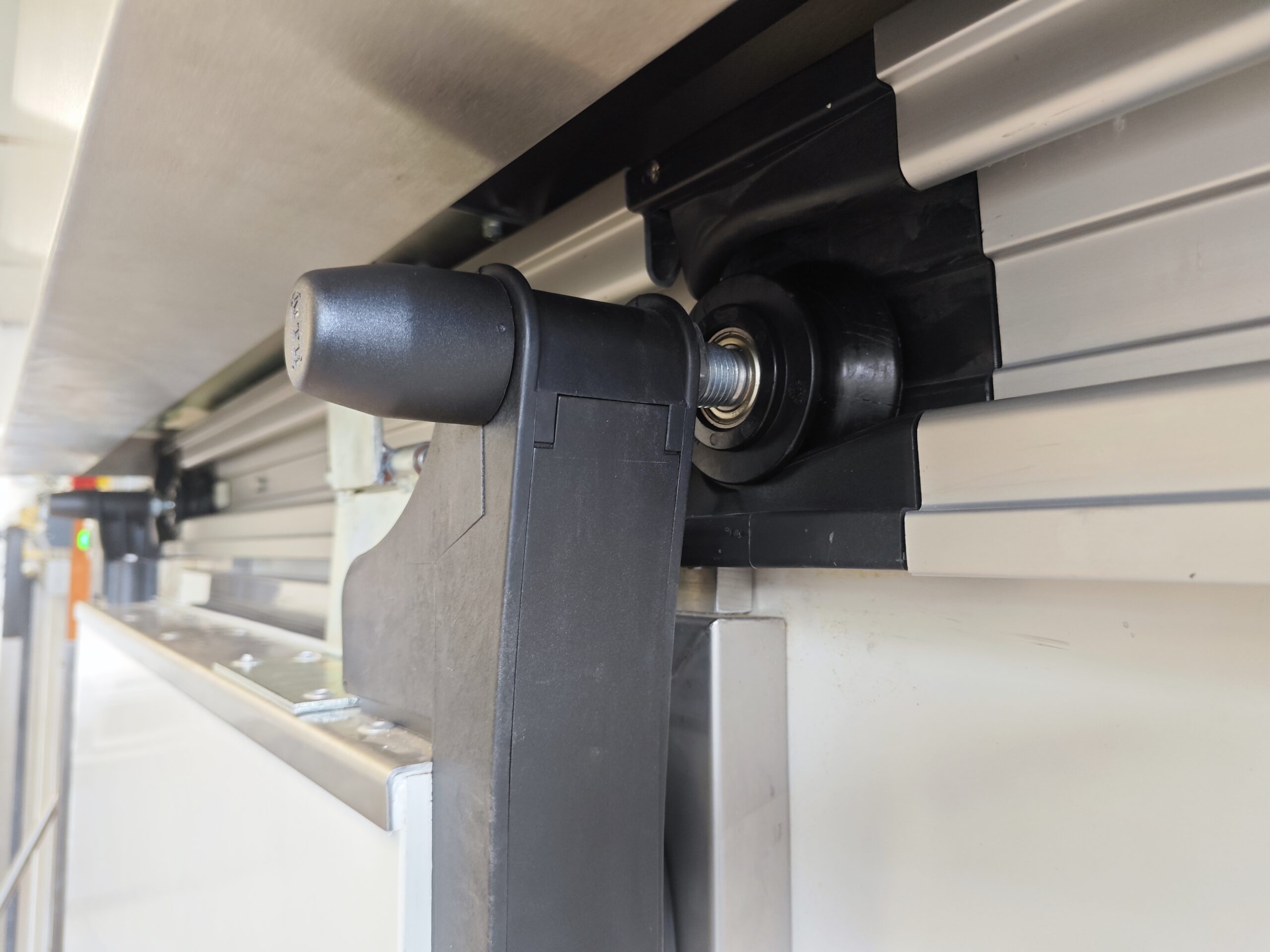
Lightweight industrial hardware
Reinforced ball-bearing upper track systems make even heavy, thick door leaves easy and quiet to operate. Ergonomic lift-assist handles help overcome seal adhesion caused by vacuum effect.
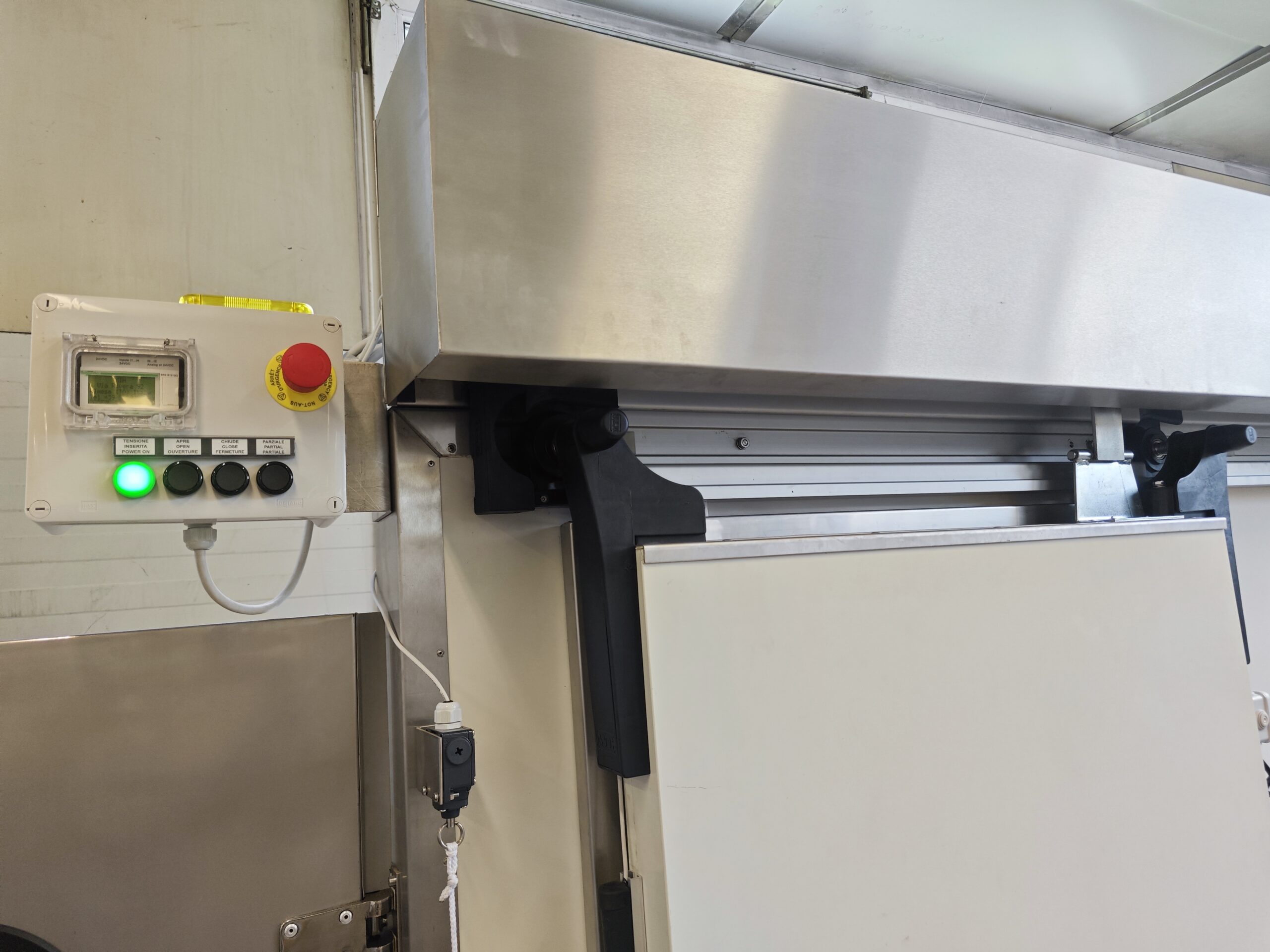
Optional automation
Most of our cold room sliding doors with industrial hardware can be prepared for later motorisation with a toothed-belt drive. In forklift traffic, automatic radar control significantly speeds up logistics.
Technical and material parameters
Every door is manufactured to order, with a frame solution suitable for the customer's sandwich panel or masonry wall thickness.
| Door leaf cladding | WNr. 1.4301 (V2A) or WNr. 1.4404 (V4A acid-resistant) food-grade stainless steel |
| Application temperature | Chiller: +10°C / 0°C | Freezer: -18°C / -20°C |
| Insulation thickness | 60 mm for standard chillers / 80 / 100 mm to 140 mm high-density PUR foam for freezer rooms |
| Closing and movement system | Top-hung drop-down track system with lower guide pin |
| Robust frame, cold air blocking and heating | Stainless steel frame system, with 220V silicone heating cable for freezer applications |
| Sealing profiles | Flexible, easily replaceable EPDM or silicone rubber seals suitable for cold environments, with double profile |
| Safety options | Internal emergency release, lockable external handle and impact protection bumper strips |

Where is an industrial-grade sliding door essential?
A stainless steel cold room sliding door, unlike a conventional hinged door, does not take up useful space in loading routes, making it ideal for logistics nodes and large wall openings.
With heated frame and 120–140 mm insulation for continuous forklift-based restocking and ice prevention.
For blast chillers, maturation chambers and slaughterhouse storage entrances where acid-resistant, washable HACCP surfaces are required.
For maturation rooms with special climate conditions, where high humidity requires thermal bridge-free and corrosion-resistant structures.
For freezer rooms in back-of-house storage areas, where reliable opening mechanics support easy and safe passage for staff.

How we configure the optimal cold room solution
Thermodynamic assessment
Our engineers analyse the required temperature, opening size and sandwich panel or masonry wall thickness to determine the required U-value.
Mechanical planning
We select the correct polyurethane foam thickness, typically 60–140 mm, define the need for frame heating and specify hardware and handle types.
Precision manufacturing
The insulating foam is pressure-injected into the steel cladding of the door leaf, ensuring a precise, thermal bridge-free structure.
Installation and calibration
Professional fixing and exact adjustment of the drop-down track system ensure that the seals close tightly and without gaps.
Technical answers before planning
When is 60 mm insulation enough, and when is 100–140 mm required?
For standard chiller rooms between +10°C and 0°C, 60 mm PUR foam is generally sufficient. For freezers from -18°C, a 100–140 mm thick door leaf is required to reduce heat loss.
Why does a freezer door freeze shut, and how can it be prevented?
At negative temperatures, moisture from warm air condenses on the door or frame edge and freezes. Our frames with integrated 220V electric heating cable ensure ice-free, easy opening.
Can a sliding door be automated later?
Most of our cold room sliding doors with industrial hardware can be prepared for later motorisation with a toothed-belt drive. In forklift traffic, radar-controlled automation significantly improves logistics speed.
What is the maximum opening size?
Thanks to custom manufacturing, we can design oversized doors optimised for forklift and pallet traffic, even in the 3000–4000 mm range, with reinforced ball-bearing upper track systems.
Energy efficiency tips and maintenance guides
There are currently no articles in this category.
Queried category: knowledge-base | Post type: post
Do not let your cooling budget escape through the door.
Send us the exact wall opening dimensions, required cooling temperature and wall structure type. Our engineers calculate the required insulation thickness and prepare the specification for a thermal bridge-free, tightly sealing door system.