
Stainless steel cold room hinged doors
Thermally insulated doors optimised for smaller wall openings, personnel access and moderate goods traffic. Heavy-duty 2D-adjustable industrial hardware, emergency release panic lock and WNr. 1.4301 / 1.4404 stainless steel cladding, up to 140 mm thickness for optimal thermodynamic balance.
A cold room hinged door is ideal where fast passage and reliable sealing are both required
Cold room hinged doors are especially useful for small and medium-sized openings, personnel access points, preparation rooms and areas where fast, intuitive use is important while heat loss must remain under control. A good system does not merely open and close; it maintains sealing performance and structural stability over the long term.
THERMOKOR Kft. cold room hinged doors are made for industrial environments where hygiene, proper thermal insulation and intensive daily use must be handled at the same time. That is why we design the structure as a complete system rather than as separate components.
The stainless steel surface, the correctly specified PUR core thickness, the precisely fitted frame and application-specific hardware together create a hinged door that operates reliably in standard chiller areas and freezer anterooms.
Thermal bridge-free design, a well-sealing gasket system and corrosion-resistant material use ensure stable long-term operation. As a result, the doors not only protect the cooled space but also contribute to energy-efficient operation and reduced maintenance needs.
This is especially important in processing plants, preparation rooms, transfer areas and every cooled zone where usability, cleanability and durability are all expected at the same time.
Thanks to custom sizing, the doors can be precisely fitted to existing building structures, sandwich panels or wall openings, providing a reliable, long-life solution for both new investments and modernisation projects.
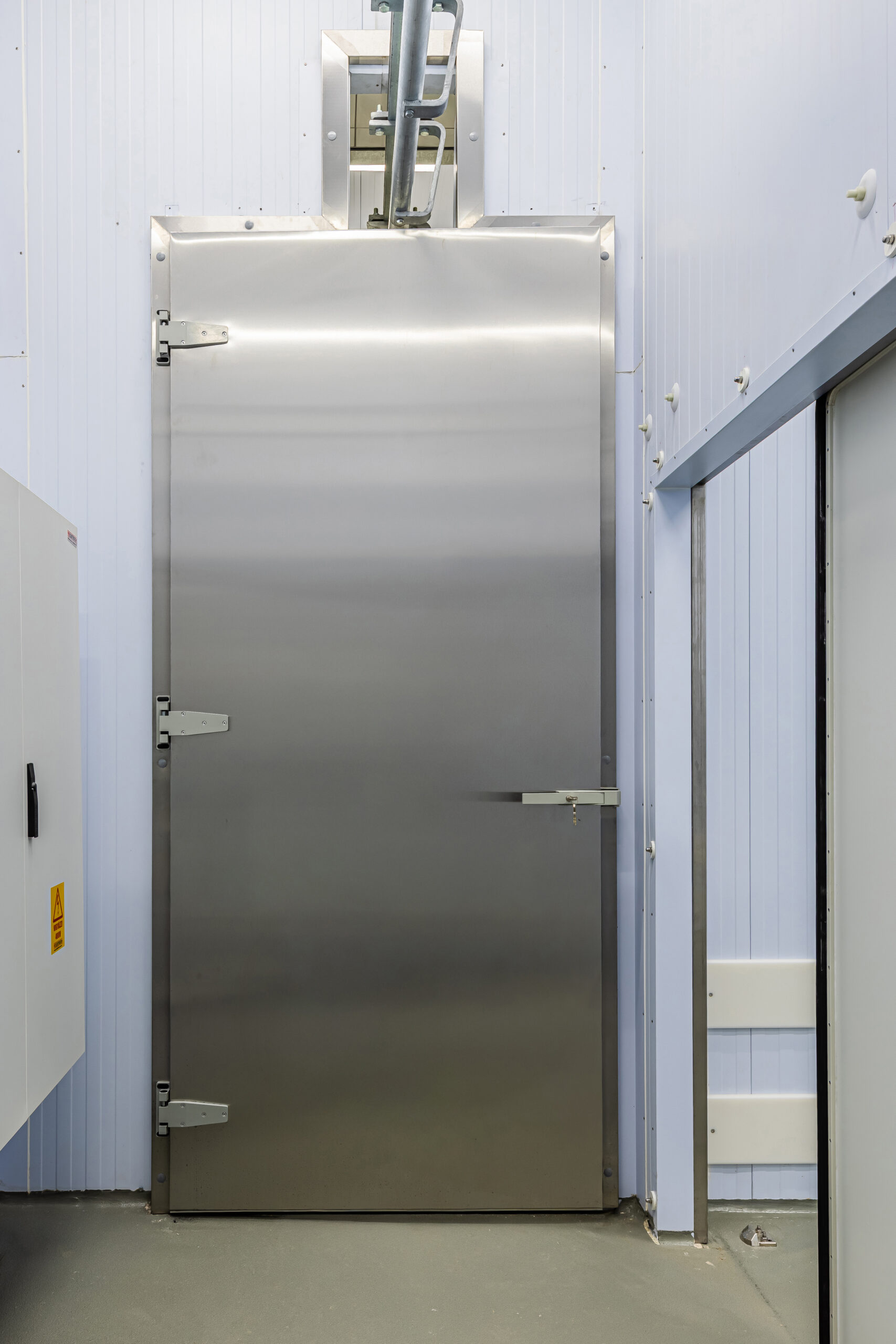
For hinged doors, sealing, frame design and usability are the key factors
Precise closing and stable frame
A cold room hinged door performs well when the connection between the frame and the door leaf remains tight over time. Precise fitting and suitable hardware help maintain sealing quality and easy operation.
Thick PUR thermal insulation
High-density PUR insulation works between the stainless steel claddings, specified according to the temperature environment to reduce heat loss and support more energy-efficient operation.
Heated frame option for freezer use
In low-temperature environments where condensation can occur, a heated frame helps prevent freezing, seal damage and inconvenient sticking during daily use.
Application-specific design is essential here as well
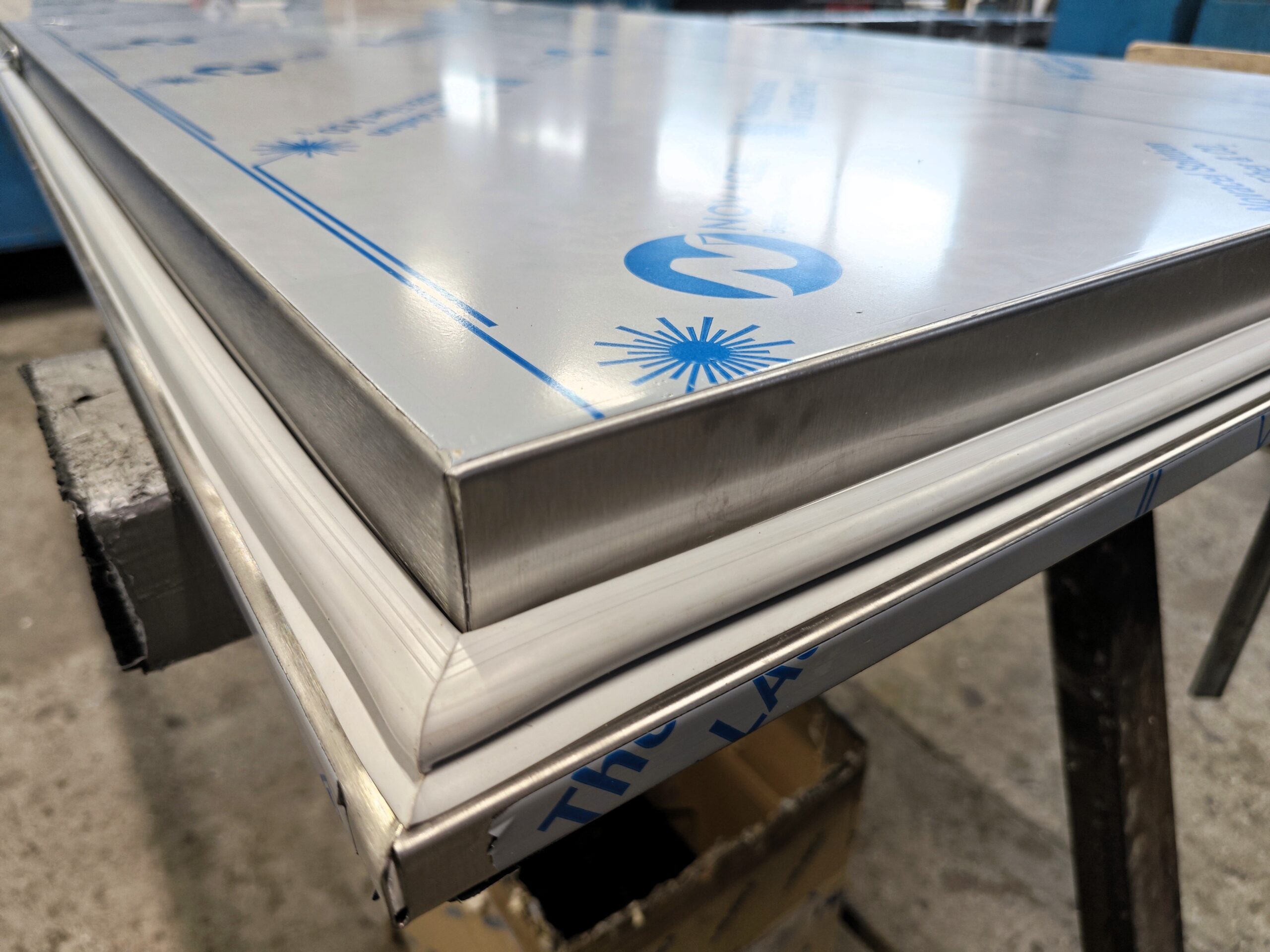
Insulated door leaf
The stainless steel cladding and high-density PUR core together provide a stable structure, proper thermal performance and durable industrial usability.

Frame and sealing system
Correct frame geometry and sealing design reduce heat loss, improve closing quality and support reliable long-term operation.

Industrial hardware and hinge
Hinges, locks and handles designed for daily industrial use ensure that the door remains easy to open, close and maintain even in intensive operating environments.
Typical technical parameters
The values below are indicative. Final technical content is always defined according to opening size, usage intensity, required temperature and industry environment.
| Material | Stainless steel cladding, in standard stainless or acid-resistant execution depending on application |
| Application range | Standard chiller, pre-cooling and freezer environments, with design adapted to requirements |
| Insulation thickness | Typically 60 / 80 / 100 / 120 / 140 mm, matched to the required thermal performance |
| Frame system | Designed to suit the given wall thickness and connection detail, with precise fitting |
| Operation | System optimised for manual use, with special hardware and accessories on request |
| Options | Heated frame, vision window, special lock, reinforced hardware and various threshold designs |
| Manufacturing | Custom-made according to opening, usage intensity and temperature environment |
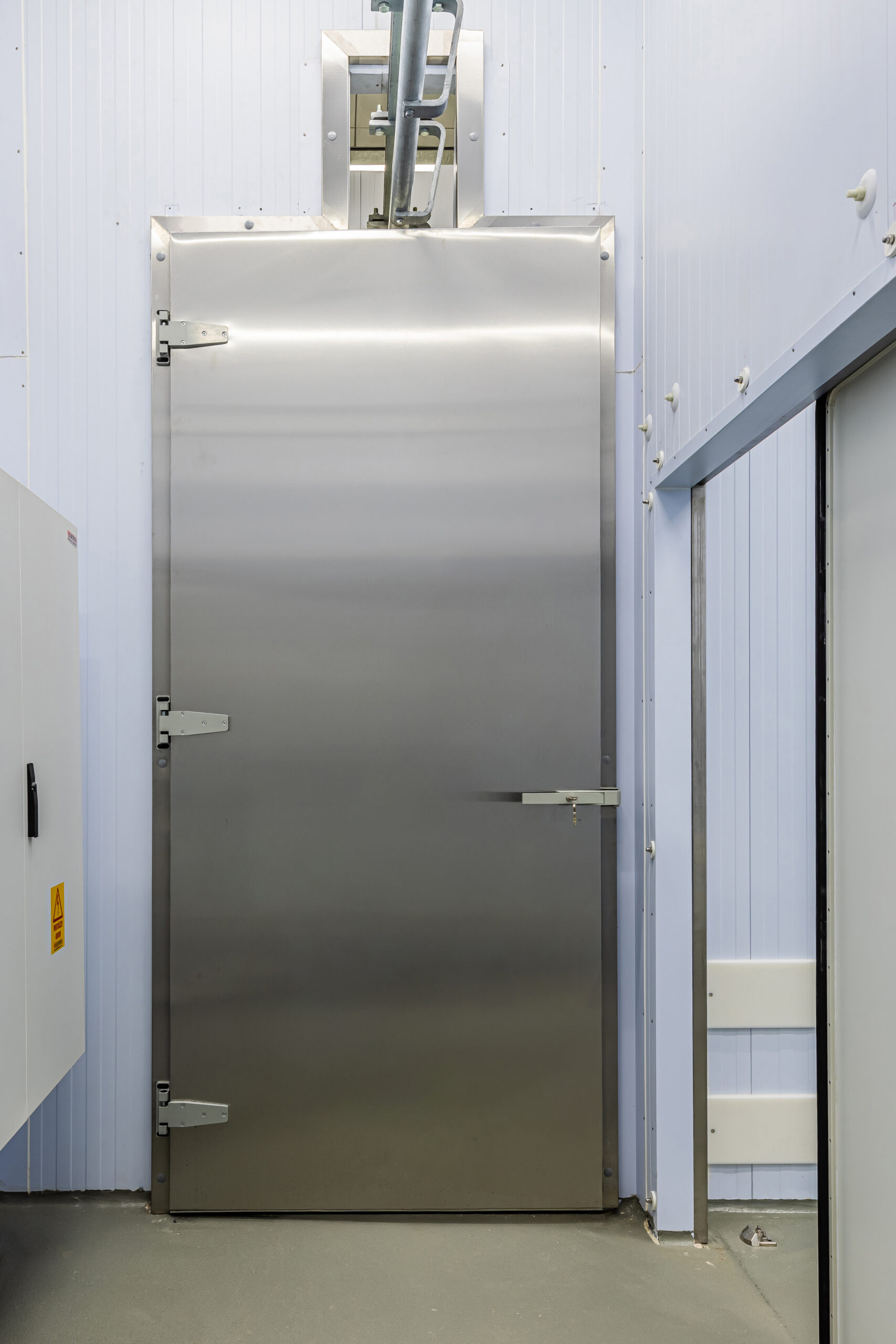
Typical application areas
Stainless steel cold room hinged doors are especially suitable where regular personnel traffic, fast access and proper thermal insulation are all important. In these cases, usability is just as important as structural performance.
Where cleanable surfaces and quick, convenient opening are basic requirements.
Where temperature stability must be maintained despite regular passage.
Where hygienic design, durability and easily cleanable stainless steel surfaces are all required.
Where the risk of condensation and freezing can be controlled with the right accessories.

How the right hinged door system is configured
Requirement assessment
We discuss opening size, temperature environment, type of use and necessary hygiene requirements.
Technical recommendation
We select the right insulation thickness, frame design, sealing system and required hardware solutions.
Custom manufacturing
The hinged door is made for the specific opening and use case, not from a compromised standard size but as a targeted industrial system.
Installation and handover
The final system is handed over with precise adjustment, proper closing and preparation for reliable long-term operation.
These questions come up most often before decision-making
When is a hinged door a better choice than a sliding door?
Typically for small and medium-sized openings, personnel passages or areas where fast, direct use is more important than a very large opening width.
Can it be used for freezer environments?
Yes. With suitable insulation and, when required, a heated frame design, the system can be made for near-freezer or freezer environments.
How well does it handle intensive daily use?
Thanks to industrial hardware, a suitable frame and precise fitting, these systems are made specifically for daily operational use, not for residential or light commercial loads.
Can custom size and opening direction be requested?
Yes. Every important parameter of the system, including size, opening direction and connection details, can be adapted to the site and usage requirements.
Further technical articles and engineering considerations
There are currently no articles in this category.
Queried category: knowledge-base | Post type: post
Not sure which hinged door your cooled space needs?
Send us the opening size, the required temperature range and a few basic details about usage. We help determine the ideal structure, insulation thickness and the necessary frame or hardware configuration.